How to style sweatshirts without looking bulky starts with one simple idea: control volume. A sweatshirt can feel soft and relaxed without swallowing your shape. The difference often comes from proportion, fabric weight, and deliberate layering. A thick fleece under a loose jacket may create unnecessary bulk. A lighter sweatshirt with structured trousers can look cleaner immediately.
Personal stylist Tan France has said, “Wear the clothes; don’t let the clothes wear you.” That principle suits sweatshirt styling perfectly. The garment should support the outfit, not dominate it. Try a slightly cropped sweatshirt with high-waisted jeans, or balance an oversized top with a narrow midi skirt. Show a small section of the wrist or ankle. Those details create visual breathing room.
This guide explores ten practical ways to create that balance. Expect advice on sleeve rolling, half-tucking, neckline choices, and smarter layering. We will also examine fabric thickness and shoulder seams, because tiny construction details matter. A sweatshirt with dropped shoulders may look relaxed, but it can quickly appear shapeless. I have made that mistake myself.
Not every oversized style needs fixing. Comfort still matters. A perfectly neat outfit can feel stiff and impractical. The goal is not to make a sweatshirt look formal. It is to make the looseness look intentional, even when the outfit is assembled quickly. Some methods may suit your body better than others. That is worth testing in a mirror, under real lighting, before leaving home.
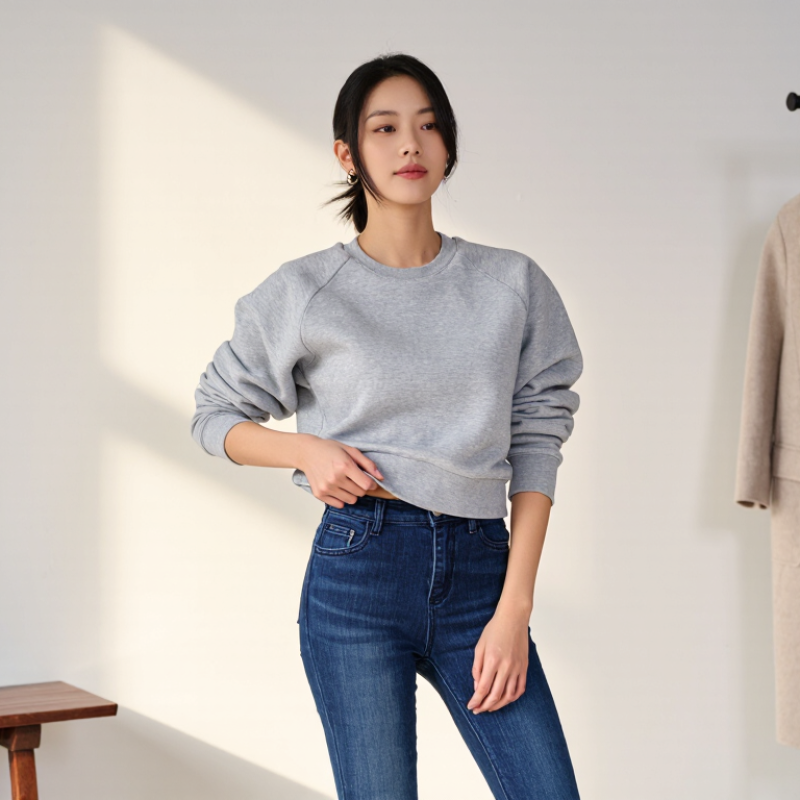
Top 10 Ways to Style Sweatshirts Without Looking Bulky
A streamlined sweatshirt begins with fabric, not accessories. Choose midweight cotton, fine fleece, or a cotton-modal blend with a smooth surface. Very thick fleece can add unwanted volume around the chest and arms. Lightweight fabric often falls closer to the body without feeling tight. It also layers more easily under a structured coat. I once chose an oversized sweatshirt because it felt comfortable, but the dropped shoulders made my frame look shorter. That mistake changed how I judge fit.
Look for a relaxed cut with defined shoulder seams and sleeves that end near the wrist bone. A slightly shorter hem can lengthen the legs, especially with high-rise trousers. Avoid excessive ribbing at the waist, since tight bands may bunch and create a rounded shape. Neutral colors can make the outline look quieter, while tonal trousers create one continuous vertical line. The rule is not perfect. Body proportions and personal comfort still matter. Try sitting, reaching, and walking before deciding.
Tips: Hold the sweatshirt against a light source. Dense, stiff fabric may stand away from your body. Check the side view in a mirror. If the hem sticks out, choose a softer drape or one size smaller. Keep one clean layer underneath, such as a thin shirt, to prevent bulk near the neckline. A neat cuff helps, too. Small adjustments make a visible difference.
| # | Styling Method | Recommended Fabric and Fit | Streamlining Principle | Best Bottom Pairing | Practical Detail |
|---|---|---|---|---|---|
| 1 | Choose a medium-weight sweatshirt | 240–320 g/m² cotton jersey or cotton-blend fleece with a regular, not oversized, fit. | Medium-weight fabric provides structure without adding excessive volume around the torso and arms. | Straight-leg trousers or dark, slim-straight jeans. | Avoid thick brushed fleece when layering under a jacket. |
| 2 | Use a tonal monochrome outfit | Keep the sweatshirt, trousers, and shoes within the same color family; choose a smooth-faced knit. | A continuous color column reduces strong horizontal breaks and creates a longer visual line. | Matching or closely related trousers in black, navy, gray, cream, or olive. | Vary texture slightly so the outfit does not look flat. |
| 3 | Layer over a slim collared shirt | Fine-gauge cotton or cotton-modal sweatshirt with a shallow crew neck and slightly relaxed chest. | A neat collar and narrow shirt placket add vertical detail without creating a bulky lower layer. | Tailored chinos or flat-front wool-blend trousers. | Choose a shirt with lightweight fabric and minimal pocket detailing. |
| 4 | Try a half-tuck at the front | Lightweight jersey, approximately 180–260 g/m², with a flexible hem and moderate length. | A small front tuck defines the waist and prevents the sweatshirt from forming one uninterrupted box shape. | High-rise straight-leg jeans, trousers, or skirts. | Tuck only a small section to preserve a relaxed finish. |
| 5 | Pick a raglan sleeve with a clean shoulder | Light-to-medium-weight knit with a smooth raglan seam and restrained sleeve volume. | Diagonal raglan seams reduce the visual emphasis of broad horizontal shoulders. | Streamlined cargo trousers or tapered utility pants. | Avoid heavily dropped shoulders if the fabric is already thick. |
| 6 | Balance an oversized sweatshirt with slim lower layers | Use a soft, drapey cotton-modal or lightweight cotton blend; hem should finish around the upper hip. | Controlled volume on top looks intentional when the lower half remains visually narrow and clean. | Slim-straight jeans, leggings with a long coat, or tapered trousers. | Keep the sweatshirt oversized in one dimension, not all dimensions. |
| 7 | Wear a zip sweatshirt open | Fine or medium-weight French terry with a two-way or standard front zip and a straight fit. | The open front creates two vertical lines that visually frame the torso. | Fitted T-shirt with straight-leg denim or tailored pants. | Keep the inner layer close to the body to prevent front-layer congestion. |
| 8 | Use a V-shaped neckline | Lightweight sweatshirt with a shallow V-neck or inset V detail and a compact ribbed collar. | The neckline exposes a small amount of skin or an undershirt, adding vertical openness near the face. | High-waisted trousers or a column-style midi skirt. | A shallow V is generally easier to layer neatly than a deep V. |
| 9 | Define the waist with a structured outer layer | Choose a smooth sweatshirt with low surface loft, worn beneath a tailored blazer, denim jacket, or trench coat. | A firm outer layer contains softness and establishes a clear shoulder-to-hem silhouette. | Front-pressed trousers or a straight midi skirt. | The sweatshirt should be thinner than the jacket to avoid sleeve bunching. |
| 10 | Keep cuffs and hems visually clean | Choose medium-firm ribbing with approximately 5–8% elastane in the rib knit for recovery. | Secure cuffs and a stable hem stop fabric from collapsing into extra folds around the wrists and hips. | Any clean-cut trouser, jean, or skirt with minimal gathered detail. | Replace stretched-out ribbing when the garment repeatedly loses its shape. |
Choose midweight cotton, fine fleece, or a smooth cotton-modal blend. Very thick fleece can enlarge the chest and arms.
Look for defined shoulder seams and sleeves ending near the wrist bone. Dropped shoulders may make your frame look shorter.
Yes. A slightly shorter hem works well with high-rise trousers. Check the fit while sitting and walking.
Hold it toward a light source. Dense fabric may stand away from your body. Check the side view in a mirror.
Use one thin shirt or fine knit with smooth seams. It should lie flat around the waist and neckline.
Try straight-leg trousers or a structured skirt. Cropped sweatshirts suit high-waisted pants, while longer styles suit slimmer trousers.
Choose a firm jacket or long coat slightly larger than the sweatshirt. Leave the front open to create visible space.
Avoid thick fleece, padded outerwear, and chunky shoes together. The outfit can feel crowded and difficult to move in.
Roll the sleeves once if they cover your hands. Keep the cuff tidy, and remove one layer when movement feels restricted.
No. Comfort and proportion still matter. I sometimes misjudge oversized cuts, so a side mirror check helps.
Learning how to style sweatshirts without looking bulky starts with choosing the right fabric and fit. Lightweight, smooth materials and a gently relaxed silhouette create a cleaner outline than thick, oversized designs. Balance is also important when layering: wear a sweatshirt over a slim base layer, avoid stacking too many heavy pieces, and leave enough space between garments for comfortable movement. Pairing a casual sweatshirt with structured bottoms, such as tailored trousers, straight-leg pants, or a firm denim style, helps create better proportions and keeps the outfit polished.
Small styling adjustments can further define your shape. Try a partial tuck, roll the sleeves neatly, or gather the hem slightly at the waist instead of letting the sweatshirt hang loosely. Finish the look with streamlined accessories, such as a simple belt, compact bag, or understated jewelry. Sleek sneakers, ankle boots, or other clean-lined footwear can visually lengthen the outfit and maintain balance. With thoughtful fabric choices, controlled layering, and intentional proportions, sweatshirts can look relaxed without appearing oversized or shapeless.

 JALSÉRA Fashion