The 2026 hoodie market offers soft fleece, oversized cuts, recycled fibers, and impressive-looking logos. Yet appearance can mislead. A premium hoodie should feel balanced in your hands, not merely attractive on a product page. The fabric should recover after stretching, while the cuffs should return neatly around your wrists. Examine the seams closely. Loose threads, uneven stitching, or twisted side panels often reveal rushed production.
Textile and fashion sustainability researcher Dr. Mark Sumner has emphasized that “the most sustainable garment is the one that stays in use for as long as possible.” That principle helps explain how to tell if a hoodie is high quality. Durability matters more than a temporary trend. A dense cotton blend may resist pilling better than a very soft, loosely knitted fleece. However, softness still matters. Scratchy fabric can make an expensive hoodie uncomfortable after one hour.
Check the inside carefully. A smooth brushed lining should not shed heavily onto a dark shirt. The hood should hold its shape without feeling stiff. A strong zipper should move cleanly, and metal eyelets should sit firmly around the drawcord. Do not trust every “premium” label. Marketing words are easy. Construction is harder to fake.
There is room for doubt. Even excellent fabric can shrink when washed incorrectly. Fit also changes with personal use. Compare measurements, read care instructions, and inspect customer photos under natural light. The best hoodie is not always the thickest one. It is the piece that keeps its shape, comfort, and character after repeated wear.
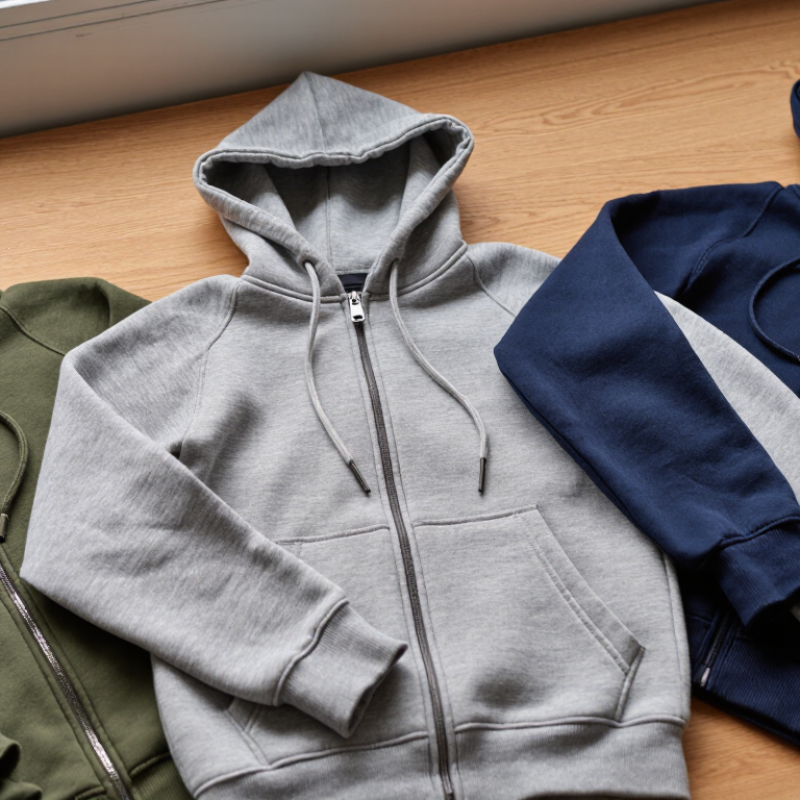
Fiber quality starts with the composition label, but percentages do not tell the whole story. A hoodie made from 100% cotton may feel rough if its fibers are short. Longer staple fibers create smoother yarns, cleaner surfaces, and better resistance to pilling. Combed cotton usually removes many short fibers. That detail matters after repeated washing. Blended fabrics can also perform well. Cotton and recycled polyester may improve softness, shape retention, or drying speed. Check the actual fiber ratio instead of trusting vague words like “premium.”
Feel the fabric near the cuffs and pocket opening. These areas reveal uneven yarns quickly. In practical garment checks, I look for loose fuzz, harsh dryness, and twisting after gentle stretching. A good hoodie should recover without feeling stiff. I once judged a heavy sample too quickly. Its 430 GSM fabric felt impressive, but the short fibers formed pills after several washes. Weight alone misled me.
For everyday wear, 280–350 GSM often balances comfort and breathability. Around 350–450 GSM feels warmer and more structured. However, GSM measures fabric weight, not complete quality. A dense, poorly finished fabric can still wear badly. Inspect the inside surface, seam stability, and wash-care instructions. Ask whether the listed GSM was measured before washing. Small manufacturing differences can change the result. That uncertainty deserves attention.
Pilling resistance is a practical test of hoodie quality. ASTM D3512 uses a Random Tumble Pilling Tester and a visual Grade 1–5 scale. Grade 5 means no visible pilling, while Grade 1 indicates severe surface fuzz and pills. Higher is better. The method evaluates fabric after controlled tumbling, not after years of washing. That distinction matters.
In my fabric checks, a hoodie can look smooth under store lighting and still fail quickly at the cuffs. Examine the chest, side seams, and pocket edges. These areas face repeated rubbing. A Grade 4 result usually suggests strong resistance, while Grade 3 may be acceptable for occasional wear. However, the number alone is incomplete. Fiber blend, yarn twist, fabric weight, and finishing can change real-world performance. ASTM International provides the test method, but it does not define one universal pass mark for every hoodie.
Textile Exchange’s Materials Market Report 2024 estimated global fiber production at 124 million tonnes in 2023. Longer-lasting garments can reduce replacement pressure, though pilling resistance is only one durability measure. Ask for the test fabric, laboratory conditions, and laundering details. One weakness remains: visual grading involves trained judgment. I would not treat Grade 5 as a guarantee. A hoodie still needs careful washing, and even excellent fabric can pill at high-friction points.
A high-quality hoodie should keep its shape after repeated washing, not only look impressive on a store shelf. Shrinkage control is a practical quality test. ISO 6330 provides standardized domestic washing and drying procedures for textile testing. It helps laboratories recreate real household care conditions with controlled temperatures, cycles, and drying methods.
Measure the hoodie before washing. Record sleeve length, body length, and chest width at marked points. Wash test pieces under the selected ISO 6330 procedure, using the stated detergent, water temperature, and drying method. Measure them again after conditioning. A reliable hoodie should remain within a shrinkage limit of ≤3% in key dimensions. For example, a 70-centimeter body length should lose no more than 2.1 centimeters. Small details matter.
Test several samples from different production batches. One perfect sample proves very little. I have seen fabric pass one wash cycle, then change noticeably after the third. That result deserves investigation, not excuses. Knitted fleece can shrink unevenly, especially around cuffs, hoods, and side seams. Check twisting, surface roughness, and seam tension as well. A professional supplier should provide test dates, sample details, laundering settings, and measured results. Buyers should ask whether the test reflects actual care instructions. A laboratory number is useful, but it cannot replace wearing and washing experience.
| Test ID | Hoodie Construction | Fabric Weight (g/m²) |
Pre-Wash Body Length (cm) |
Post-Wash Body Length (cm) |
Length Change (%) |
Pre-Wash Chest Width (cm) |
Post-Wash Chest Width (cm) |
Width Change (%) |
Result |
|---|---|---|---|---|---|---|---|---|---|
| H-001 | Cotton/polyester fleece, brushed interior, set-in sleeves | 350 | 72.0 | 70.3 | −2.4% | 56.0 | 55.1 | −1.6% | PASS |
| H-002 | Cotton-rich fleece, brushed interior, raglan sleeves | 320 | 71.0 | 69.0 | −2.8% | 55.0 | 53.8 | −2.2% | PASS |
| H-003 | 100% cotton French terry, unbrushed interior, set-in sleeves | 300 | 70.0 | 67.6 | −3.4% | 54.0 | 52.4 | −3.0% | FAIL |
| H-004 | Cotton/polyester fleece, compact knit, reinforced shoulder seams | 380 | 73.0 | 71.8 | −1.6% | 57.0 | 56.2 | −1.4% | PASS |
| H-005 | Cotton-rich fleece, brushed interior, oversized body | 340 | 75.0 | 72.6 | −3.2% | 60.0 | 58.4 | −2.7% | FAIL |
Interpretation: Lower shrinkage values generally indicate better dimensional stability. Testing should use the same garment size, measurement points, wash load, detergent, water temperature, drying method, and conditioning procedure for valid comparisons.
A strong hoodie begins with disciplined seam construction. ISO 13935-2 measures the maximum force needed to rupture a sewn seam, using the grab method. In practical testing, technicians cut fabric specimens, align the seam between machine jaws, and pull until failure. The result is recorded in newtons, alongside the failure location. A high number matters, but it does not tell the whole story.
Inspect the shoulder, armhole, pocket, and cuff seams closely. Even stitches should not show skipped loops, loose thread tails, or puckering. Reinforced areas often need stronger thread or additional stitching. Ask for the test direction, specimen count, fabric type, and failure mode. Without those details, one impressive force value can mislead. There is no universal passing number; the target should match fabric weight, fit, and intended use.
Durability affects environmental performance. WRAP’s Valuing Our Clothes report estimated that extending clothing life by nine months could reduce carbon, water, and waste footprints by about 20–30%. That makes seam strength more than a laboratory detail. A hoodie surviving repeated washing and elbow movement creates real value. Still, test results may not mirror every home laundry routine. I would check both laboratory data and physical samples. Pull the pocket gently. Turn the garment inside out. Small flaws often appear there.
The best hoodies in 2026 should keep their color after repeated washing. AATCC TM61 is a useful screening method for this purpose. Its 45-minute accelerated test can approximate five home launderings, according to the AATCC Technical Manual. It does not perfectly copy every washing machine, detergent, or water temperature. That limitation matters.
Ask for the colorfastness result, not only a bright product photograph. A pale rinse cloth suggests dye transfer. Uneven fading around the cuffs may reveal weak fixation. Check red, navy, and black fabrics carefully. They often expose problems faster. My own inspection starts after one cold wash and one warm wash. I still inspect the seams by hand.
Safety requires a separate question. OEKO-TEX Standard 100 evaluates textile components for harmful substances, including dyes, finishes, and accessories. Its requirements differ by product class and skin-contact level. A hoodie with direct skin contact should meet stricter limits than an outer layer. The certificate scope should match the actual fabric, drawcords, labels, and prints. Check the certificate number and validity through the official verification system.
Industry testing should guide judgment, not replace it. Textile Exchange’s 2024 Materials Market Report shows polyester remained the largest fiber category globally, increasing the importance of chemical and recycled-content scrutiny. A test report may cover one production lot only. Color can still vary between batches. That is an inconvenient detail, but quality checking should leave room for doubt.
Measure sleeve length, body length, and chest width before washing. Wash samples using a standardized household-care procedure. Condition and measure them again afterward. Key dimensions should shrink by no more than 3%. A 70-centimeter body should lose no more than 2.1 centimeters. Small differences matter.
No. Test several samples from different production batches. One perfect sample proves very little. A hoodie may pass once, then change after the third wash. Compare cuffs, hoods, side seams, and body panels. Uneven shrinkage deserves investigation.
Check twisting, rough surfaces, seam tension, and changed proportions. Cuffs may tighten while the body stays stable. Hoods can become uneven. Measure after conditioning, not while the fabric is damp. That detail is easy to miss.
A tensile seam test pulls a sewn seam until it breaks. The result is recorded in newtons and includes the failure location. Inspect shoulders, armholes, pockets, and cuffs by hand. Look for skipped stitches, loose thread tails, and puckering. Pull the pocket gently.
No. The suitable target depends on fabric weight, fit, and intended use. Ask for testing direction, specimen count, fabric type, and failure mode. A large force value alone can mislead. The failure location matters too. Laboratory numbers need context.
Request a washing colorfastness result, not only a bright product photograph. A screening test may approximate five home launderings. It cannot perfectly reproduce every machine, detergent, or water temperature. Inspect a pale rinse cloth for dye transfer. Check red, navy, and black fabrics carefully.
Uneven fading around cuffs may indicate poor color fixation. Dye transfer may appear on a light cloth after washing. Compare the garment after cold and warm washes. Inspect seams and printed areas afterward. Photos can hide problems.
Ask for a current chemical-safety certificate covering the actual garment components. The scope should include fabric, drawcords, labels, finishes, and prints. Requirements may differ with skin-contact levels. Verify the certificate number through the official system. Do not assume every production lot matches.
Learning how to tell if a hoodie is high quality starts with examining its fabric and construction. Check the fiber composition, staple length, and weight; a balanced blend with longer fibers and a 280–450 GSM range often indicates better durability, warmth, and shape retention. Pilling resistance can be evaluated using the ASTM D3512 Grade 1–5 scale, where a higher grade reflects a smoother surface after wear and washing.
Shrinkage control is another important factor. ISO 6330 washing tests can reveal whether the hoodie maintains its original dimensions, with shrinkage of 3% or less serving as a useful benchmark. Strong seams should also withstand ISO 13935-2 tensile testing without opening or stretching excessively. Finally, assess colorfastness through AATCC 61 testing and look for OEKO-TEX Standard 100 certification to support safer textile choices. Together, these checks provide a practical method for judging quality beyond appearance alone.

JALSÉRA Fashion