Choosing a T-shirt fabric in 2026 is less about following trends. It is about matching the material to real use.
So, what fabric is best for t-shirts? The answer changes with climate, activity, budget, and care habits. A heavyweight combed cotton shirt can feel substantial and smooth against the skin. A lightweight cotton jersey may suit hot afternoons better. For training, recycled polyester can move sweat quickly, although some wearers dislike its synthetic feel. Lyocell offers a cool, fluid touch, while hemp blends can provide strength and a slightly textured surface.
Textile scientist Dr. Seshadri Ramkumar often stresses the practical side of textiles: “Textile performance depends on the application.” That principle matters when comparing modern T-shirt fabrics. A fabric that feels excellent in a fitting room may cling during exercise. Another may survive repeated washing but lose softness. I have seen low-quality shirts twist at the side seams after only a few cycles. The label alone did not reveal that weakness.
This guide examines comfort, breathability, durability, shrinkage, pilling, and environmental claims. It also considers fabric weight, fiber blends, and finishing treatments. Organic cotton is not automatically the best choice. Recycled polyester is not automatically the worst. That conclusion needs more thought.
The most reliable decision begins with the wearer. Daily basics need softness and shape retention. Summer shirts need airflow. Travel shirts need quick drying and easy care. There is no perfect fiber for every wardrobe, but there may be a better fabric for your next T-shirt.
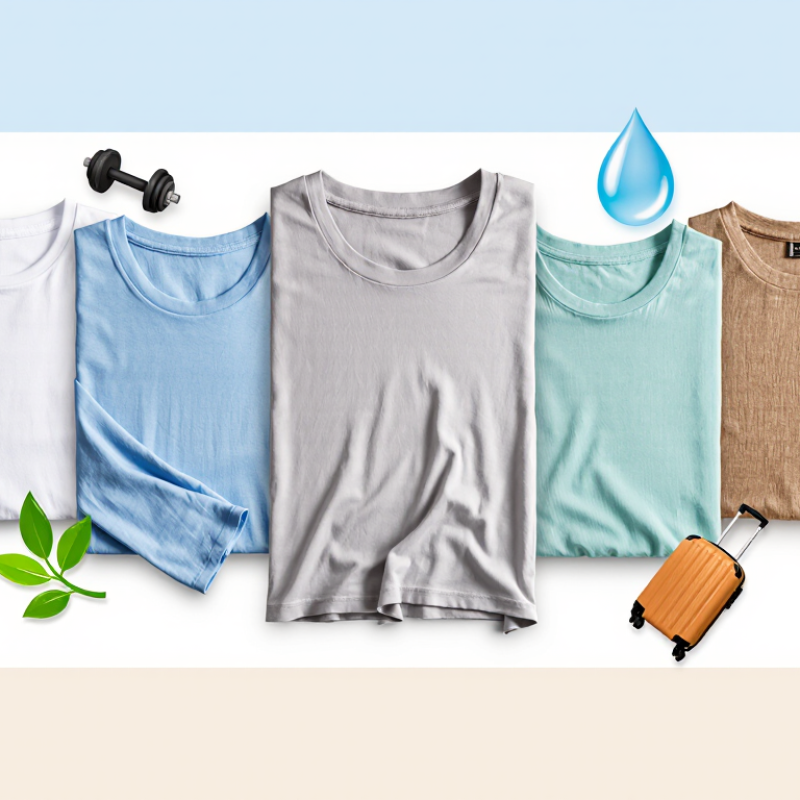
A high-quality T-shirt fabric in 2026 should feel comfortable before it looks impressive. Long-staple cotton usually creates smoother yarns and reduces loose fibers on the surface. A compact, even knit also matters. Hold the shirt toward a window and inspect for thin patches or uneven loops.
Weight should match the purpose. A 160–180 GSM fabric suits warm daily wear, while 200–240 GSM feels sturdier and drapes with more structure. Softness alone can mislead. Some finishes feel silky at first but weaken after repeated washing. I check shrinkage, colorfastness, pilling, and seam recovery after several wash cycles. The collar should return to shape, not wave around the neck.
Breathability remains essential, especially in humid weather. Cotton performs well, while carefully selected cellulosic fibers can improve moisture handling and softness. Recycled fibers may support lower-impact production, but their strength and consistency require testing. Traceable fiber origin and clear production records add credibility, yet paperwork cannot replace physical inspection. No fabric wins everywhere. I may be too strict about minor slubs, although they sometimes show natural character. The better question is practical: does the fabric stay comfortable, stable, and presentable after real use?
Comfort should come before visual appeal. Long-staple cotton often creates smoother yarns and fewer loose surface fibers. A compact, even knit also matters. Hold the shirt toward a window. Thin patches reveal weakness.
A 160–180 GSM fabric works well for warm daily wear. It feels light but can retain reasonable shape. A 200–240 GSM fabric feels sturdier and drapes more firmly. Very thin fabric may twist or become transparent after washing.
Check the shirt under natural light. Look for uneven loops, thin areas, or holes. Stretch the collar gently. It should return to shape, not wave around your neck. Wash a sample several times before judging it.
Not always. Some finishes feel silky at first but weaken after repeated washing. Check softness together with shrinkage, pilling, colorfastness, and seam recovery. I sometimes trust a plain fabric more than an overly polished one.
Cotton usually handles light sweat comfortably. A loose knit can improve airflow around the chest and underarms. Fiber content alone does not decide breathability. Mesh sections and lighter fabric may help more than the label.
A cotton-polyester blend can dry faster and resist wrinkles. Cotton reduces the slick synthetic feeling. A medium blend may balance comfort and durability. However, polyester can retain odor during long wear. That drawback is easy to underestimate.
Linen blends feel airy in very warm weather. They often become softer with use. Expect visible creases. The fabric may also feel rough during the first few wears. That is not necessarily a defect, but personal preference matters.
Inspect the collar stitching, side seams, and fabric recovery. Loose threads may suggest poor finishing. A collar that stays stretched can look careless quickly. I may be too strict about minor slubs, since some show natural character.
Recycled fibers may support lower-impact production. Their strength and consistency still require testing. Traceable fiber records add credibility, but documents cannot replace physical inspection. A fabric must remain comfortable and stable after real use.
Choosing what fabric is best for t-shirts in 2026 depends on comfort, durability, breathability, purpose, and environmental impact. High-quality fabric should feel soft against the skin, maintain its shape after repeated washing, manage moisture effectively, and provide suitable airflow. Cotton remains a comfortable and breathable choice, while polyester offers strength, quick drying, and reliable performance during active use. Blended fabrics can combine the advantages of both, balancing softness, durability, stretch, and easy care.
Sustainability is also becoming more important in fabric selection. Recycled fibers, responsibly produced natural materials, low-impact dyeing, and improved textile technologies can help reduce waste and resource consumption. For everyday wear, breathable cotton or a soft blend may be ideal; for exercise, lightweight moisture-managing synthetics or performance blends may work better. The best choice ultimately depends on climate, activity level, washing habits, desired fit, and how long the shirt is expected to last.

 JALSÉRA Fashion