Winter jeans can be surprisingly versatile, but warmth depends on more than choosing a thicker pair. The right layers protect your legs, balance your outfit, and keep cold air from reaching your waist. This guide explores what to wear with jeans in winter through practical combinations that work in everyday life. Think chunky knit sweaters, quilted jackets, wool coats, thermal tops, and weatherproof boots.
Details matter. A relaxed pair of jeans leaves room for thermal leggings, while straight-leg denim works neatly with ankle boots. Dark denim often looks polished with a camel coat and leather gloves. Light-wash jeans feel more casual beside a puffer jacket and a soft beanie. I have found that half-tucking a heavy sweater can improve proportions, although it may feel bulky with high-rise denim. Small adjustments help.
Comfort comes first.
Fabrics also influence warmth. Merino wool helps regulate temperature without adding excessive weight, while fleece-lined layers provide extra insulation on freezing mornings. Water-resistant boots are useful when sidewalks become wet or lightly snowy. Thick socks should fit comfortably, not squeeze your feet inside the boots. That mistake can make your feet colder.
The best outfits are not always the most fashionable ones. A beautiful wool coat may still feel impractical during strong wind. Likewise, wide-leg jeans can drag through slush without careful styling. These ten winter outfit ideas focus on realistic layering, useful textures, and dependable combinations. You can adapt each look to your climate, commute, and personal style without sacrificing warmth.
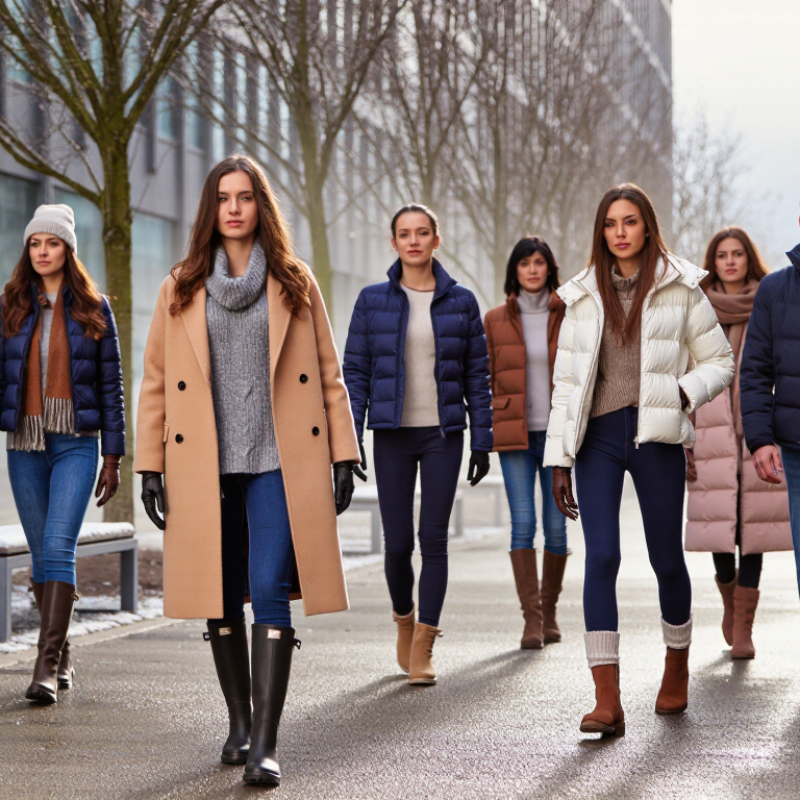
10 Best Things to Wear With Jeans in Winter?
Winter jeans work best with layers that manage warmth, moisture, movement, and daily wear. I have found that a moisture-wicking base layer prevents clammy skin during indoor heating. A merino or synthetic long-sleeve shirt fits smoothly beneath a flannel overshirt or medium-weight sweater. Avoid very thick layers at the waist. They can restrict movement when sitting or climbing stairs. A quilted vest adds core warmth while keeping your arms flexible. For harsher weather, wear a wind-resistant shell over your sweater. Jeans alone rarely block cold wind.
Tips: Choose jeans with slight stretch, but inspect the fabric after repeated wear. Stretch can improve comfort, yet thin denim may wear faster at the knees. Wear wool-blend socks and insulated boots with enough room for your toes. Tight boots reduce circulation and create colder feet. A scarf seals the gap around your collar, while lined gloves protect your hands during short outdoor walks. Waterproof outer layers also help when snow turns wet.
Durability matters in winter because salt, slush, and frequent washing damage fabric. Brush off dried salt before laundering, then follow the care label. Hang jeans fully open so moisture does not remain trapped at the waistband. I sometimes overdress for short errands, then regret the heat indoors. That is a useful reminder. Build layers you can remove easily, especially when commuting between cold streets and heated rooms.
Comparative winter-layering ratings based on warmth, moisture control, mobility, and durability. Each criterion is scored from 1 to 5, with higher scores indicating better everyday performance.
Insulating layers such as wool sweaters, fleece jackets, and down vests provide strong warmth, while thermal base layers and moisture-wicking synthetic pieces improve comfort during active winter days. Boots, durable outerwear, and textured accessories add protection without significantly limiting movement.
For winter jeans, the base layer matters more than many people expect. Thermal knits create a warm air pocket against the skin. Merino wool adds insulation while managing moisture during long walks or crowded commutes. Choose a close fit, but leave enough room for comfortable movement. Tight layers can flatten insulation.
ISO 9920 offers clothing insulation guidance through CLO values. One CLO equals about 0.155 square metres kelvin per watt. However, CLO describes the clothing system, not one magical garment. Jeans, thermal underwear, socks, knitwear, and outerwear work together. Wind, humidity, activity, and body shape also change comfort. A practical outfit might combine a thin thermal base, merino wool, jeans, and a wind-resistant coat. It may feel warmer than its estimated CLO suggests.
Tips: Test your layers outside for ten minutes. If your back feels damp, reduce insulation or improve ventilation. If your knees feel cold, add a longer thermal layer beneath the jeans. Avoid treating ISO 9920 as a guarantee. It helps compare clothing, but personal comfort still requires observation. I once over-layered before a slow evening walk and felt clammy within minutes. The calculation looked sensible; the experience was not. Feet and hands also deserve attention, especially when jeans leave a gap above the boot.
Jeans become much more useful in winter when the mid layer is chosen by fiber performance. A fine wool sweater adds warmth without much bulk. It also manages moisture during crowded commutes. Cotton sweaters feel soft, but they hold dampness longer. I reserve them for dry, low-activity days. A wool-blend cardigan works well over a plain shirt and under a roomy coat.
Flannel shirts offer familiar comfort with practical structure. Brushed cotton traps warm air around the torso. However, thick flannel can feel heavy indoors. A lighter flannel over a thermal shirt is easier to regulate. Fleece pullovers are warm, quick-drying, and surprisingly light. Their weakness is wind. Wear a wind-resistant outer layer when walking through open streets. A fleece vest leaves the arms free for driving or carrying bags. It also fits neatly over dark denim.
Other useful choices include a merino base shirt, a cotton overshirt, a quilted liner, a synthetic knit, and a heavy jersey shirt. Fiber content matters, but construction matters too. Dense knits block drafts better than loose ones. I check sleeve length carefully. Short sleeves expose the wrists above the jeans and look unfinished. Long hems can bunch under a belt. Pockets help, though overloaded pockets distort the denim. My own mistake was choosing warmth over mobility. After climbing stairs, that sweater felt excessive. Winter clothing needs small adjustments, not one perfect formula.
A practical comparison of warm, versatile mid-layer options for everyday winter outfits.
| No. | Mid-Layer to Wear With Jeans | Typical Fiber Composition | Warmth | Moisture Performance | Bulk Under a Coat | Best Winter Use | Styling With Jeans |
|---|---|---|---|---|---|---|---|
| 1 | Merino Wool Sweater | 100% wool or wool blended with a small amount of nylon | High | Warm when damp; manages moisture vapor and reduces odor buildup | Medium | Cold commutes, travel, and smart-casual days | Pair with dark straight-leg jeans, leather boots, and a structured coat |
| 2 | Cotton-Cashmere Crewneck | Cotton blended with cashmere or another fine animal fiber | Medium-High | Comfortable but absorbs moisture slowly to dry | Low-Medium | Indoor settings and dry, mild winter weather | Wear with medium-wash jeans, a collared shirt, and suede or leather shoes |
| 3 | Chunky Wool Cardigan | Wool, often mixed with acrylic, cotton, or nylon for durability | High | Good insulation; can feel heavy after absorbing water | High | Relaxed weekends and cool indoor spaces | Use with slim or straight jeans and a simple T-shirt to balance the texture |
| 4 | Brushed Cotton Flannel Shirt | Cotton or cotton blended with recycled or conventional polyester | Medium | Soft and breathable; cotton-heavy versions dry slowly | Low-Medium | Layering on dry days and casual outdoor activities | Leave it open over a plain shirt with relaxed jeans and casual boots |
| 5 | Grid Fleece Pullover | Polyester, sometimes blended with elastane for stretch | Medium-High | Dries quickly and retains warmth better than cotton when damp | Low-Medium | Active winter walks, errands, and variable temperatures | Choose a clean-cut fleece with dark jeans for a sporty but polished look |
| 6 | Thermal Henley | Waffle-knit cotton, merino wool, or synthetic performance fibers | Medium | Waffle texture traps air; synthetic versions dry fastest | Low | A base-to-mid layer for commuting and casual wear | Layer beneath a vest, overshirt, or jacket with tapered jeans |
| 7 | Corduroy Overshirt | Cotton corduroy, sometimes blended with polyester or elastane | Medium | Breathable but absorbent; not ideal for wet conditions | Medium | Dry autumn-to-winter transitions and casual offices | Match a fine-wale overshirt with black jeans and a lightweight knit |
| 8 | Merino-Wool Quarter-Zip | Merino wool or a wool-synthetic blend | High | Breathable, temperature-regulating, and relatively odor resistant | Medium | Travel, commuting, and smart-casual winter outfits | Wear over an Oxford-style shirt with dark jeans and clean leather sneakers |
| 9 | Quilted Vest | Synthetic shell with polyester or recycled-polyester insulation | Medium-High | Synthetic insulation keeps some warmth when damp and dries quickly | Medium | Active layering when arm mobility is important | Place over a flannel or sweatshirt with straight-leg jeans and sturdy boots |
| 10 | Heavyweight Sweatshirt | Cotton fleece or cotton blended with polyester | Medium-High | Comfortable and breathable; cotton retains moisture after wetting | Medium-High | Dry-weather weekends and casual indoor-to-outdoor wear | Choose a structured fit with dark jeans, a wool coat, and minimal sneakers |
Performance note: Warmth depends on fabric weight, knit density, fit, and the outer layer. For wet or highly active conditions, wool and quick-drying synthetic fibers generally perform better than cotton because they retain less water and dry faster.
Jeans need a strong winter shell. Parkas, wool coats, and puffers each change comfort, shape, and airflow. ASTM D737 measures air permeability, reported in cubic feet per minute per square foot at a controlled pressure. It does not measure warmth directly. That distinction matters.
Wool coats feel warmer through weight and structure, not simply low air permeability. Their tailored shoulders work with straight-leg jeans, while a scarf seals the open collar. Puffers create loft, so their insulation depends more on fill thickness than ASTM D737 airflow results. A compact puffer suits slim jeans and sneakers, but bulky quilting can distort the silhouette. Layering exposes a weakness: the warmest jacket can feel clammy indoors. ASTM D737 data helps compare shells, yet it cannot replace fit checks, movement tests, or honest comfort notes.
Jeans work well in winter when your footwear protects more than your style. Choose insulated, water-resistant boots with deep, flexible tread. The U.S. National Weather Service reports that a wind chill of -18°F can cause frostbite in about 30 minutes. Dry socks matter, too. Wool-blend socks manage moisture and retain warmth better than thin cotton socks. Leave room inside the boot. Tight layers can reduce circulation.
Gloves should cover the wrist, not stop at the palm. Wind can enter through that small gap quickly. Choose lined gloves with textured palms for safer movement on icy railings. A close-fitting hat reduces heat loss around the head and ears.
The Centers for Disease Control and Prevention recommends covering exposed skin during extreme cold, especially when wind increases. I sometimes choose fashionable gloves that fail in wet snow. That mistake feels minor indoors, but not outside.
Tips:
Check your boot soles before leaving. Ice hides in shallow patterns. Add thermal insoles if your feet become cold, but avoid cramping your toes. Keep an extra pair of socks in your bag. The Occupational Safety and Health Administration advises workers to stay dry and use layered clothing in cold environments. Jeans alone provide limited wind protection, so wear thermal leggings underneath on colder days. A scarf tucked into the coat can close the final gap around your neck.
Choose a moisture-wicking long-sleeve shirt. It reduces clammy skin indoors. Synthetic fabric or fine wool can fit smoothly under a shirt or sweater.
Wear a medium-weight sweater or flannel overshirt over the base layer. A quilted vest warms your core while leaving your arms flexible. Avoid thick waist layers. Sitting may become uncomfortable.
A parka, wool coat, or puffer can work well. Choose a longer shell for cold commutes and snow. Jeans alone block little wind.
A tightly woven parka usually limits wind better. A wool coat adds structure and warmth through its weight. A puffer relies on loft and fill thickness. The warmest option may feel clammy indoors.
It measures how easily air moves through outer fabric. Lower airflow can suggest better wind resistance. It does not directly measure warmth. Fit and movement still matter.
Slight stretch improves comfort when walking, sitting, or climbing stairs. Inspect the knees after repeated wear. Thin stretch denim may wear faster. Comfort has a trade-off.
Wear wool-blend socks with insulated boots. Leave enough room around your toes. Tight boots can reduce circulation and create colder feet. Room matters.
Brush off dried salt before washing. Follow the care label carefully. Hang jeans fully open after washing. Moisture can hide inside the waistband.
Build removable layers for commuting. A scarf closes the collar gap, while lined gloves protect your hands. I sometimes overdress for short errands and regret it indoors. That mistake is useful.
Choosing what to wear with jeans in winter starts with balancing warmth, moisture control, mobility, and durability. Begin with a comfortable thermal knit or merino wool base layer to retain body heat without restricting movement. ISO 9920 CLO guidance can help estimate insulation needs in different cold conditions. For the middle layer, consider sweaters, flannel shirts, fleece, or other breathable fabrics, selecting materials according to warmth, softness, and moisture management. These layers should fit comfortably under your outerwear while allowing easy movement.
Complete the outfit with a protective parka, wool coat, or insulated puffer. Compare outer layers by wind resistance, breathability, and fabric performance, with ASTM D737 airflow data offering useful guidance. Winter-ready footwear should include sturdy, slip-resistant boots, warm socks, and enough room for circulation. Add insulated gloves and a hat to reduce heat loss and improve comfort. Together, these practical layers create a durable, flexible outfit for cold-weather activities.

JALSÉRA Fashion