Choosing a T-shirt for layering sounds simple. Then a thick seam bunches beneath your sweater, or a loose neckline peeks out where you wanted a clean line. The right choice depends on fabric weight, fit, and the clothes going over it. For readers asking “what t-shirts are best for layering,” a useful starting point is a lightweight, breathable shirt that sits close to the body without pulling across the chest or shoulders.
Apparel product developer Jordan Lee puts the fit test this way: “A good base layer should disappear under your next layer, not fight it.” Look for smooth cotton or a cotton blend, a flat side seam, and a collar that keeps its shape after washing. Under a button-down, a crew neck usually stays discreet; beneath an open shirt, a relaxed neckline may feel more natural. Color matters, too. A heather gray tee often shows less sharply beneath pale fabrics than bright white, though the result varies with the shirt above it. Try both in daylight.
Keep it simple. But not rigidly. A slim cut can layer neatly, yet a shirt that clings may feel uncomfortable by midday. And fabric labels do not tell the whole story; stitching and shrinkage can change the fit after a few washes. This guide compares practical options for different outfits, climates, and budgets, so you can choose a T-shirt that feels comfortable on its own and works quietly underneath. That small detail makes a difference.
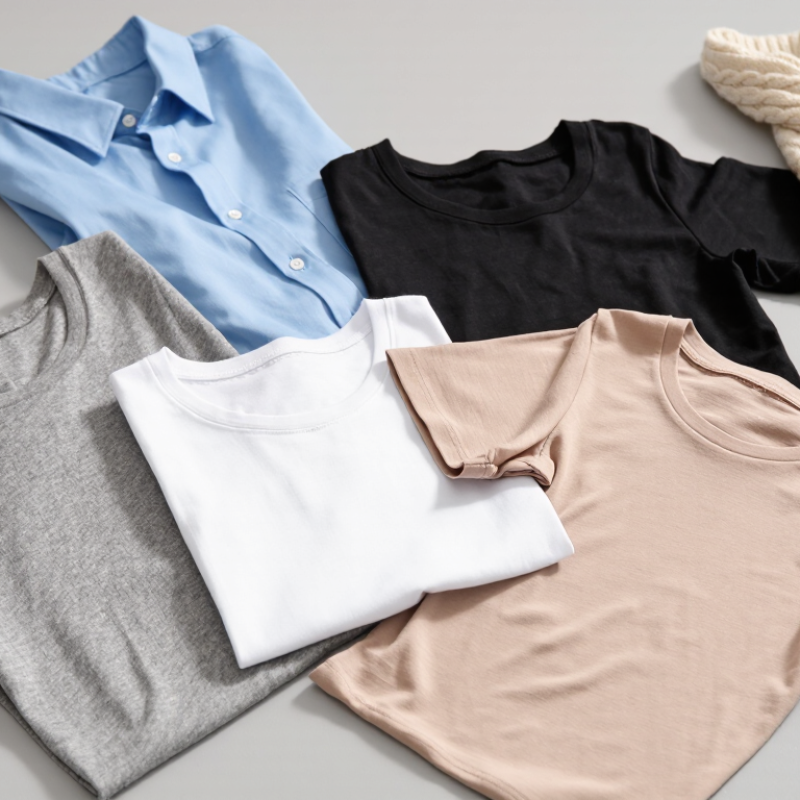
A T-shirt works well for layering when it feels comfortable under another garment without bunching. Look for a smooth, midweight fabric that sits flat beneath a shirt or sweater. Cotton blends can offer softness with a little stretch, while a lightweight knit may feel cooler in warm weather. Fabric labels can help, but the feel and fit matter more than the label alone.
Check the shoulders and sleeves. Seams should lie flat, and sleeves should not twist when you move your arms. A crew neck is easy to hide under most collars; a slightly wider neckline may suit open shirts better. Avoid a hem that is so long it gathers beneath your waistband. Fit matters. Very slim shirts can feel restrictive, while oversized ones may wrinkle under a close-fitting layer.
Tips: Try the T-shirt with the layer you plan to wear. Sit, reach, and raise your arms. Notice any pulling at the shoulders or folds at the waist. If the outfit feels bulky indoors, it may not improve outdoors; layering needs can vary with weather and personal comfort. One small detail is easy to overlook: a thick collar can show through a fine knit. Check in natural light before choosing.
Lightweight and midweight jersey often add less bulk beneath shirts, sweaters, or jackets. The bars show the midpoint of each indicative fabric-weight range; actual weights vary. For comfortable layering, also look for a smooth surface and a close-but-not-tight fit.
For layered outfits, a soft cotton jersey T-shirt is a dependable base: it feels comfortable against skin and pairs easily with an open shirt or knit. Choose a lightweight, closely knitted fabric that does not bunch under a second layer. Thin is not flimsy. Merino wool can add warmth without much bulk, while polyester dries quickly after a commute or workout. A cotton-polyester blend can balance softness and faster drying, though the exact feel depends on the knit and finish. Fit matters, too. A tee that is too loose may gather beneath a jacket; one that is too tight can feel restrictive.
Textile Exchange’s Materials Market Report 2024 estimates that global fiber production reached 124 million tonnes in 2023; polyester made up 57% and cotton 20%. Those figures describe supply, not comfort or quality. A common fiber is not automatically the best one for your routine. Check the fabric label, then consider where you will wear the tee, how warm your outer layer is, and whether you need easy washing. I still find fabric choice easy to overthink. A simple test helps: wear the tee under your usual overshirt, raise your arms, and notice whether the sleeves twist or the hem rides up.
Choosing a T-shirt for layering starts with fit. It should sit close to your body without pulling across your chest or shoulders. Check the sleeve opening, too: a wide sleeve can bunch beneath a shirt or sweater. Leave enough room to move. A mirror helps, but raising your arms reveals more.
Weight matters just as much. A lightweight cotton or cotton-blend shirt usually slips under a button-up without adding bulk. For a jacket or open overshirt, a midweight fabric can hold its shape and feel less flimsy. Try the layers together, not separately. A shirt that feels perfect alone may tug at the hem under a second layer. I still get this wrong sometimes; a slightly longer tee can bunch at the waist.
Tips: Check the fabric label and feel the shirt in your hands. If it feels stiff, it may not drape smoothly. Wash it once before judging the fit, since some fabrics can shrink. Keep seams flat, and choose a neckline that stays hidden or looks intentional.
| Layering Use | Suggested Weight | Fit to Look For | Fabric and Construction | Why It Works |
|---|---|---|---|---|
| Under a shirt or lightweight sweater | About 130–160 GSM | Close to the body without pulling at the chest or shoulders | Fine, smooth jersey; cotton or a cotton blend | A lighter fabric adds less bulk beneath fitted layers. |
| Everyday layering under a jacket | About 150–180 GSM | Regular fit with enough room to move comfortably | Cotton jersey or a cotton-rich blend with a stable neckline | A versatile middle range that balances drape, coverage, and ease of layering. |
| Under an open overshirt or cardigan | About 160–190 GSM | Regular or slightly relaxed; avoid excess fabric at the waist | Medium-weight jersey with a smooth surface | Provides a more substantial appearance while remaining easy to wear beneath an open layer. |
| Visible base layer in cool weather | About 180–220 GSM | Regular fit; choose a length that stays tucked or sits below the outer layer | Denser jersey; brushed fabric can add a warmer feel | The added fabric weight can improve coverage and provide a more substantial base. |
| Relaxed, loose-layered outfit | About 180–240 GSM | Relaxed fit with enough room for movement, not so oversized that layers bunch up | Medium-to-heavy jersey with a shape-holding structure | A sturdier fabric can hold its silhouette when worn as a visible part of the outfit. |
| Warm-weather layering | About 130–170 GSM | Regular or gently relaxed, with room for airflow | Lightweight, breathable jersey; fabric feel depends on fiber and knit | Lower fabric weight can feel less bulky in warm conditions, though it may offer less coverage. |
Fit and weight note: GSM means grams per square metre and describes fabric weight, not softness or quality by itself. Weight ranges are approximate; fiber content, knit, finishing, and garment construction also affect warmth, drape, and coverage. For layering, check shoulder seams, chest ease, sleeve length, and whether the shirt sits smoothly beneath your outer layer.
When sourcing T-shirts in China, judge fabric by its stated composition and measured weight, not by sales adjectives. For layering, a smooth, midweight knit can sit under a shirt without feeling bulky. Ask whether the yarn is combed or ring-spun, and request the fabric weight in grams per square metre. These details help explain softness and durability, but they do not guarantee either. Labels alone are not proof.
Request a production sample and wash it before approving an order. Check whether the body twists, the collar waves, or the fabric shrinks more than expected. Measure chest width, body length, and sleeve length against a written size chart. Look at shoulder seams and hems for skipped stitches and uneven tension. Feel the seams. A neat finish should not feel rough against the skin. I would not rely on a soft showroom sample alone; it may not match bulk production.
Ask how the supplier checks fabric shade, measurements, and stitching across finished batches. A clear inspection record is more useful than a broad promise of “high quality.” If color consistency matters, compare garments under the same light and ask about colorfastness testing. China is not a quality grade; factories and processes vary. Even a careful checklist can miss a flaw, so agree on tolerances and inspect a sample from the actual production run before shipment.
Matching a T-shirt to layering starts with the outer piece. Under a fitted blazer or fine knit, choose a smooth, lightweight fabric that lies flat at the shoulders. A jersey around 150–180 gsm often works, though fabric density varies between mills. Check the sleeve seams under your jacket; extra bulk can bunch there. A crew neck suits many outfits, while a shallow V-neck can disappear beneath an open shirt. Keep the neckline visible if you want it to look intentional.
For casual layers, such as an open overshirt over a tee, a slightly heavier cotton jersey can hold its shape. Make sure the hem does not hang far below the overshirt unless that contrast is deliberate. Color matters, too: an off-white tee softens dark layers, while a close tonal match creates a quieter look. In warm weather, prioritize breathability and leave enough room for air between layers. In colder weather, a close fit under a sweater reduces trapped folds.
There is no flawless formula. A tee that feels comfortable alone may pull at the chest beneath a jacket, so test the full outfit while moving your arms. Check the care label and allow for possible shrinkage after washing. Even a well-chosen fabric can feel wrong on a humid day. Fit, fabric, and the actual outer layer should guide the choice more than a fixed rule.
Soft cotton jersey feels comfortable against skin and sits smoothly under an open shirt. Merino wool adds warmth with little bulk. Polyester dries quickly after exercise or a commute.
Choose a close fit that does not pull across your chest or shoulders. Wide sleeves can bunch beneath a sweater. Leave room to move.
A lightweight jersey, around 150–180 gsm, often lies flat beneath a fitted jacket. Fabric density varies, so check the actual feel. Try raising your arms.
A slightly heavier cotton jersey can hold its shape under an open overshirt. Keep the hem near the overshirt’s edge unless you want a visible contrast.
A cotton-polyester blend can balance softness and quicker drying. Its feel depends on the knit and finish, so the label alone may not tell the whole story.
A crew neck suits many outfits. A shallow V-neck may disappear under an open shirt. Keep the neckline visible if you want it to look deliberate.
Wear the full outfit and move your arms. Check for twisted sleeves, a rising hem, or fabric pulling at the chest. I still miss these details sometimes.
Check the care label and wash the shirt once before judging its fit; some fabrics shrink. Choose breathable fabric in warm weather, but remember, humidity can still make layers feel uncomfortable.
Choosing what t-shirts are best for layering starts with comfort, breathability, and a smooth shape that sits neatly beneath shirts, sweaters, or jackets. Lightweight cotton, cotton blends, and soft modal fabrics can work well, depending on the weather and how much stretch you prefer. For cooler days, a slightly heavier knit may add warmth, while a thin, breathable fabric helps prevent overheating under multiple layers.
Fit and construction also matter. A close but comfortable cut reduces bunching, and the right length helps keep the shirt tucked or covered as needed. When buying T-shirts in China, check fabric consistency, stitching, neckline stability, and whether the garment keeps its shape after washing. Consider your usual outfits and climate, then choose colors, sleeve lengths, and fabric weights that coordinate easily with the layers you already wear.

JALSÉRA Fashion