Choosing everyday pants starts with a practical question: what materials are best for everyday pants? The answer depends on movement, climate, washing habits, and personal comfort. In my experience, cotton blends offer a useful balance for commuting, errands, and relaxed office wear. A small amount of elastane can improve movement without making trousers feel overly tight. Linen feels cool and airy, especially on warm days, but it wrinkles easily. Wool blends can regulate temperature well, although they may require gentler care. Denim remains durable, yet heavy denim can feel uncomfortable during long walks.
Comfort matters most.
This guide compares common trouser materials through durability, breathability, stretch, maintenance, and appearance. It also considers fabric weight, weave, and fiber quality, because two cotton pants can perform very differently. A tightly woven pair may resist abrasion at the knees, while a softer fabric may feel better against the skin. Reliable choices should match real routines, not just product descriptions. Check care labels, inspect stitching, and consider how the fabric feels after sitting for an hour. Textile professionals often assess fiber content and construction together, rather than trusting one feature alone. Still, no material is perfect. I sometimes prioritize softness and regret it when the fabric loses shape. That small mistake matters. The best choice is usually a balanced compromise, supported by honest testing, careful laundering, and realistic expectations.
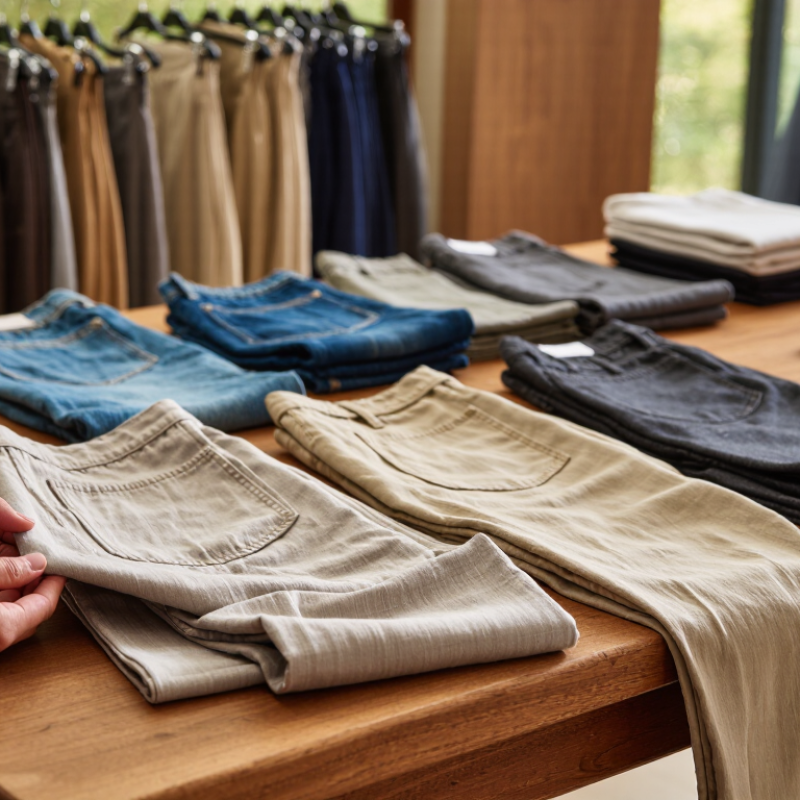
Everyday pants should feel comfortable at a desk, on a commute, and during a quick walk. Cotton remains a dependable choice because it feels soft and allows moderate airflow. Denim offers stronger structure, but heavy denim can feel stiff after several hours. Linen feels cool and airy in warm weather. However, it wrinkles easily and may look less polished by afternoon.
Polyester and nylon improve durability, drying speed, and resistance to light rain. They can work well for travel or active routines, although some fabrics may feel warm against the skin. Wool blends provide natural temperature control and a smoother appearance. They usually cost more and need gentler care. Elastane adds stretch, which helps when sitting, climbing stairs, or bending. Too much stretch may reduce the pants’ shape over time. I once chose extremely soft cotton pants, but they lost their form quickly. Comfort alone was not enough.
Choosing everyday pants starts with the skin, not the fiber label. In daily wear tests, I notice fabric weight and surface softness before fiber names. Cotton feels familiar because it absorbs sweat well. However, it can stay damp after a crowded commute. Standard cotton has about 8.5% moisture regain, while polyester is near 0.4% under standard conditions. These figures explain drying speed, not total comfort. The 2024 Textile Exchange Materials Market Report estimated global fiber production at 124 million tonnes in 2023. Polyester accounted for 57%, and cotton represented 19%.
Breathability depends heavily on fabric construction. A loose plain weave can feel cooler than dense stretch twill. ASTM D737 measures air permeability, but laboratory airflow cannot fully predict comfort on a humid street. Moisture control needs another test. AATCC TM195 evaluates absorbency, spreading speed, and one-way liquid transport. Look for pants that move sweat away from the skin, then dry without feeling clammy. This sounds simple. It is not.
For office-to-commute use, a lightweight cotton-polyester blend often balances softness and drying performance. Linen can feel impressively airy, though its wrinkles may frustrate some wearers. I once chose the thinnest fabric available and regretted it; it felt cool but lacked structure. Check the waistband, pocket lining, and inner thigh area by hand. Dense seams can trap heat, even when the main fabric breathes. Moisture control also depends on fit. Tight pants reduce air movement, while excessive looseness can create friction. My practical mistake was treating fiber content as a complete answer. It is only the starting point.
| Material | Comfort (1–5) |
Breathability (1–5) |
Moisture Absorption (1–5) |
Moisture Wicking (1–5) |
Drying Speed (1–5) |
Best Everyday Use | Important Considerations |
|---|---|---|---|---|---|---|---|
| Cotton | ★★★★★ | ★★★★☆ | ★★★★☆ | ★★☆☆☆ | ★★☆☆☆ | Casual trousers, chinos, and relaxed daily wear | Soft and breathable, but it can hold moisture and dry slowly after becoming wet. |
| Linen | ★★★★☆ | ★★★★★ | ★★★★☆ | ★★★☆☆ | ★★★★☆ | Warm-weather pants and loose-fitting summer styles | Highly breathable and good at releasing heat; it wrinkles easily and may feel crisp at first. |
| Hemp | ★★★★☆ | ★★★★☆ | ★★★★☆ | ★★★☆☆ | ★★★☆☆ | Durable casual pants and warm-weather clothing | Strong, breathable, and absorbent; commonly blended with softer fibers to improve hand feel. |
| Merino Wool | ★★★★☆ | ★★★★☆ | ★★★☆☆ | ★★★★☆ | ★★★★☆ | Travel pants, cool-weather trousers, and temperature-variable conditions | Helps regulate temperature and resist odor; fine fibers are more comfortable than coarse wool. |
| Polyester | ★★★☆☆ | ★★★☆☆ | ★☆☆☆☆ | ★★★★☆ | ★★★★★ | Active commuting, travel, and quick-drying everyday pants | Low moisture absorption and fast drying; performance depends strongly on fabric structure and finish. |
| Nylon | ★★★☆☆ | ★★★☆☆ | ★☆☆☆☆ | ★★★★☆ | ★★★★★ | Lightweight travel pants, outdoor trousers, and durable blends | Light, strong, and quick-drying; it may feel less natural and can retain heat in dense weaves. |
| Viscose / Rayon | ★★★★☆ | ★★★★☆ | ★★★★☆ | ★★☆☆☆ | ★★☆☆☆ | Soft, drapey trousers and lightweight relaxed clothing | Comfortable and breathable, but it absorbs moisture, dries slowly, and may weaken when wet. |
| Lyocell | ★★★★★ | ★★★★☆ | ★★★★☆ | ★★★★☆ | ★★★☆☆ | Soft everyday pants, warm-weather trousers, and blended fabrics | Smooth, breathable, and absorbent; drying speed is moderate because the fiber retains moisture. |
| Cotton–Polyester Blend | ★★★★☆ | ★★★☆☆ | ★★★☆☆ | ★★★☆☆ | ★★★★☆ | Low-maintenance chinos, uniforms, and versatile work pants | Balances cotton softness with polyester durability and faster drying; the exact blend ratio matters. |
| Wool–Polyester Blend | ★★★★☆ | ★★★★☆ | ★★★☆☆ | ★★★★☆ | ★★★★☆ | Smart travel trousers and year-round tailored pants | Combines wool’s temperature regulation with polyester’s strength and quicker drying. |
| How to read the ratings: Five stars indicate a stronger relative performance for everyday pants. Moisture absorption describes how much water a fiber can take in, while moisture wicking describes how effectively fabric moves liquid across its surface. Actual performance also depends on fiber blend, yarn, weave or knit, fabric weight, garment fit, and finishing treatments. | |||||||
How to Choose the Best Materials for Everyday Pants?
Durability starts with fiber choice, but fabric construction matters just as much. The Textile Exchange Materials Market Report 2024 estimates polyester represented about 57% of global fiber production in 2023. It resists abrasion and dries quickly, yet heat and repeated washing can weaken its finish. Cotton feels cooler against the skin, although knees may bag sooner in lightweight weaves. Dense twill usually survives daily friction better.
Stretch requires balance. A small amount of elastane can improve sitting comfort and movement, but excessive stretch may reduce shape retention. Check the waistband after a full day of wear. It should return smoothly, not curl or stay loose. ISO 20932-1 provides a useful framework for measuring fabric stretch and recovery. Still, laboratory recovery is not identical to real life. Sweat, body heat, and overloaded pockets complicate the result.
For practical evaluation, wash a sample repeatedly and compare knee, seat, and waistband measurements. The Jeans Redesign project uses 30 home launderings as a durability benchmark. That is a helpful target, not a guarantee. Look for reinforced seams, stable stitching, and fabric weight suited to your routine. My own preference is a firm cotton-rich twill with modest stretch. It feels less impressive on day one, but often looks more controlled after months of commuting. Comfort can be judged quickly; shape retention needs patience.
Comparing typical durability, stretch, and shape retention on a 1–5 scale
Cotton-elastane and nylon-elastane blends provide the best everyday stretch, while polyester and nylon generally offer strong durability and shape retention. These relative ratings reflect typical fiber behavior; actual performance also depends on fabric weight, weave, finishing, and garment construction.
Choosing pants fabric starts with the weather you actually face, not the season on a calendar. For hot, humid days, lightweight cotton, linen blends, or breathable synthetics can reduce cling and discomfort. Linen feels wonderfully cool. It wrinkles fast. In cold weather, brushed cotton, wool blends, or heavier twill provide warmth without excessive bulk. Rain changes the decision. A tightly woven fabric with a water-resistant finish may handle light showers, but it will not replace proper rainwear.
Your daily activities matter just as much. Stretch cotton or a small amount of elastane helps when climbing stairs, cycling, or sitting for long hours. For physical work, durable canvas or reinforced twill can resist abrasion around the knees and seat. However, very heavy fabric may feel tiring during travel. Check the seams, pocket openings, and waistband. These areas often fail before the main fabric does. I once chose rugged pants for a long commute and regretted it by lunchtime.
Personal needs deserve equal attention. Sensitive skin may respond better to smooth cotton, soft modal blends, or carefully finished seams. If you wash clothes frequently, choose fabric that dries reasonably fast and keeps its shape. Always read the care label. “Easy care” can still mean careful drying. A simple test helps: sit, bend, and walk several steps before buying. The best material is not always the softest one. Fit, climate, movement, and maintenance must work together. Your first choice may still need reconsideration.
Choosing everyday pants starts with the care label, not just the fabric name. Cotton feels familiar, but frequent hot washing can shrink it and consume considerable energy. Linen usually becomes softer with wear, although it wrinkles quickly. Wool resists odors and may need less washing, but it can felt when exposed to heat or rough agitation. Check the recommended water temperature, drying method, and ironing limits before buying.
Small habits affect a garment’s environmental cost. Washing pants only when needed preserves fibers and reduces water use. Air-drying also prevents heat damage, especially in fabrics containing elastane. A sturdy cotton blend may outlast a delicate “natural” fabric, despite sounding less sustainable. I once assumed natural fibers were always the better choice. That view was too simple. Farming methods, processing, transport, and garment lifespan all matter.
Look for dense stitching, secure pocket seams, and fabric that keeps its shape after gentle stretching. These details often predict value better than a low price. Recycled fibers can reduce demand for new resources, but they are not automatically durable or easy to recycle again. Pants that fit well, tolerate regular care, and remain wearable for years usually offer stronger value. Still, personal routines matter. If hand-washing is unrealistic, choose a washable material you will actually maintain. A perfect fabric choice does not exist.
Choose lightweight cotton, linen blends, or breathable synthetics. They reduce cling and discomfort. Linen feels cool. It wrinkles quickly.
Brushed cotton, wool blends, and heavier twill provide warmth. They can feel bulky, so check comfort while walking and sitting.
Stretch cotton or fabric with a little elastane supports movement. Test the pants by bending and sitting before buying.
Check seams, pocket openings, and the waistband. These areas may fail first. Look for dense stitching and secure pocket seams.
No. Tightly woven fabric may handle light showers. It will not replace proper rainwear during steady rain.
Smooth cotton, soft modal blends, and carefully finished seams may feel gentler. Rough stitching can still cause irritation.
Read the care label carefully. Check washing temperature, drying instructions, and ironing limits. “Easy care” is not always effortless.
No. Farming, processing, transport, and garment lifespan also matter. A durable blend may last longer than a delicate natural fabric.
Look for shape retention, strong stitching, and realistic care requirements. A low price means little if the pants fail quickly.
Not always. Washing only when needed preserves fibers and reduces water use. Air-drying limits heat damage. My first routine was too frequent.
Choosing the right fabric for everyday pants depends on how you plan to wear them and what qualities matter most to you. Common options include cotton, linen, wool, synthetic fibers, and blended materials, each offering different levels of softness, breathability, moisture control, and warmth. Cotton feels comfortable and natural, while linen works well in hot weather. Synthetic fibers can improve quick drying and durability, and blends often balance comfort with performance. When asking “what materials are best for everyday pants,” consider how much stretch, shape retention, and resistance to wear you need for walking, commuting, work, or casual activities.
Weather and personal preferences should also guide your choice. Lightweight, breathable fabrics suit warm conditions, while heavier or insulating materials provide greater comfort in cooler weather. Check the care label before buying, since easy-care fabrics may save time and energy. Finally, consider sustainability by choosing durable materials, responsibly made fibers, and pants that can be worn regularly for many seasons. The best overall value comes from a practical combination of comfort, performance, longevity, care needs, and personal style.

JALSÉRA Fashion