Global buyers often ask one practical question: how durable are denim jackets? The answer depends on fabric, construction, finishing, and daily use. A jacket made from 12-ounce denim may resist regular wear, while lighter denim can feel softer but lose shape sooner. Fabric weight matters. It is not the whole story.
Experienced buyers inspect pocket corners, sleeve seams, collar edges, and metal hardware. Loose stitching or weak bartacks can become visible after only a few weeks. Small details matter. A strong jacket usually has even seams, secure buttons, and reinforced stress points. However, visual inspection alone can create false confidence. I have seen attractive samples develop twisted seams after washing.
For international purchasing, durability should be checked through samples, supplier records, and repeat testing. Recognized ISO or ASTM textile methods can help assess abrasion, colorfastness, seam strength, and dimensional change. Wash testing reveals whether the body shrinks unevenly or the sleeves become short. Abrasion testing shows how quickly denim thins at the elbows and pocket openings. Reliable suppliers should share material specifications, test results, and production tolerances. Clear records build trust. Still, no jacket performs identically in every climate or wardrobe. Indigo may fade. Hardware may tarnish. Consumer expectations also differ across markets. This article examines construction quality, testing practices, fabric choices, and supplier communication. It also questions the limits of common durability claims. The evidence cannot remove every risk, but it can make purchasing decisions more informed and measurable.
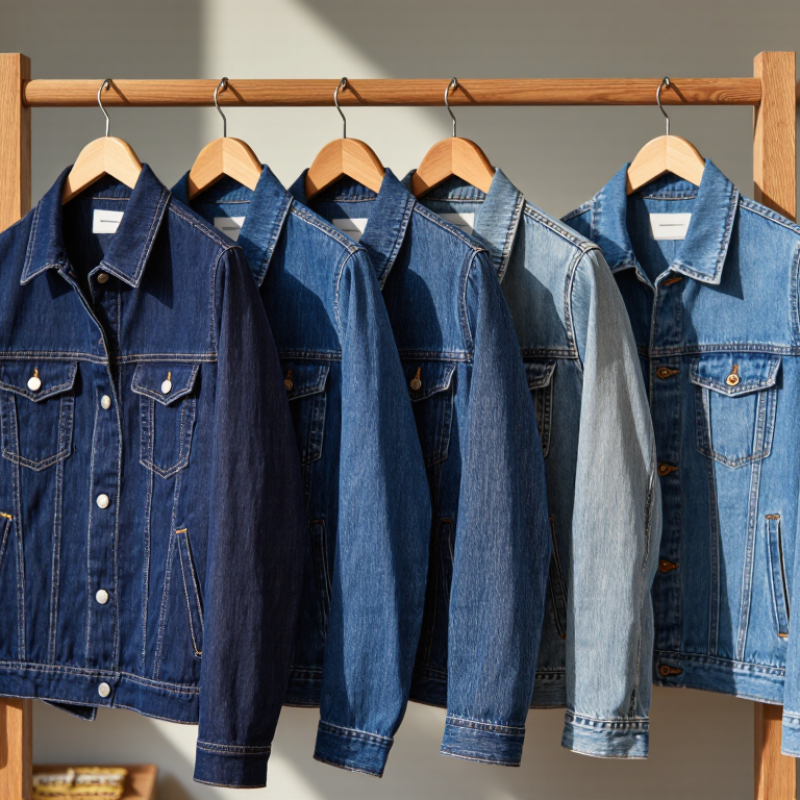
Durability is more than thick denim or a heavy hand feel. For global buyers, it means a jacket can withstand repeated wear, washing, and movement without losing its shape or function. Look closely at stress points: shoulder seams, pocket corners, cuffs, and the button area. Secure stitching and cleanly finished seams matter there. So does fabric recovery. A sleeve that stays stretched after bending may signal trouble. Heavy fabric can still wear poorly. That distinction is easy to miss.
Professional testing helps make durability more measurable. ISO 12947 assesses abrasion resistance, while ISO 13934 evaluates fabric tensile strength. These results can guide comparisons, but they do not fully predict years of daily use. Fit, wash care, and how often someone wears the jacket also matter. WRAP’s Valuing Our Clothes report estimates that extending clothing’s active life by nine months can reduce its carbon, water, and waste footprints by around 20–30 percent. Longer wear has value. Yet a lab score alone cannot promise it. Buyers should ask for test methods, sample details, and clear care instructions, then inspect real construction. A small weakness may be telling.
How Durable Are Denim Jackets for Global Buyers?
A denim jacket’s lifespan starts with its cloth, not its label. A balanced cotton twill, tightly set yarns, and even fabric weight help resist abrasion without making the jacket stiff. Heavier is not always tougher. Poor yarn quality or loose weaving can still leave thin spots at elbows and cuffs. Buyers should request abrasion, seam-strength, and shrinkage results from finished garments, not rely on fabric weight alone.
Construction decides where early failure appears. Look closely at shoulder seams, armholes, pocket corners, and cuff openings. Double-stitched seams and reinforced pocket ends can reduce stress-related tearing. Buttons should sit firmly, with enough fabric around each attachment point. ASTM D3884 and D1683 offer recognized methods for assessing fabric abrasion and sewn-seam strength. Useful tests. Yet lab results cannot fully predict years of rough wear, repeated washing, or careless repairs.
Care matters too, though it cannot rescue weak stitching. WRAP’s 2012 Valuing Our Clothes report estimated that extending clothing life by nine months could cut carbon, water, and waste footprints by 20–30%. That is a broad clothing estimate, not a denim-jacket guarantee. Still, it makes repairable construction commercially relevant. I would also check post-wash measurements and inspect real samples; specifications can look reassuring, and still miss a crooked seam.
| Durability factor | Lighter-duty build | Everyday build | Heavy-duty build | What it means for longevity |
|---|---|---|---|---|
| Denim weight | About 6–9 oz/yd² | About 10–13.5 oz/yd² | About 14 oz/yd² and above | Heavier denim often resists everyday wear better, but weight alone does not determine strength; yarn, weave, finishing, and testing also matter. |
| Fiber composition | Cotton blend or stretch denim | Mostly cotton, with a small amount of elastane in some styles | Typically cotton-rich, low-stretch denim | A little stretch can improve comfort and mobility. High-stretch fabrics may need careful laundering and can be more vulnerable to heat-related loss of elasticity. |
| Yarn and weave | Fine yarns or a softer, lighter weave | Balanced yarn strength and twill construction | Strong yarns and a firm, compact twill | A well-made twill helps the fabric withstand regular friction. Fabric testing, such as abrasion and tear testing, provides more evidence than appearance alone. |
| Seams and stitch density | Simple single-needle seams | Secure seams with consistent stitching | Reinforced stress seams, such as double-stitched or felled seams where appropriate | Consistent stitching and secure seam finishes reduce the chance of seam opening. Extra stitching is useful only when the seam is properly designed and sewn. |
| Stress-point reinforcement | Limited reinforcement | Reinforced pocket corners and high-stress areas | Reinforced pocket corners, cuffs, and other load-bearing points | Bar tacks or other suitable reinforcement can help prevent tearing where pockets and seams experience repeated pulling. |
| Fasteners and trims | Lightweight buttons or snaps | Securely attached buttons with consistent finishing | Robust, corrosion-resistant hardware with reinforced attachment points | Hardware durability depends on material, finish, attachment, and care. Buyers shipping to humid regions should consider corrosion resistance and verify it through testing. |
| Dye and finishing | Fashion wash or pronounced distressing | Standard indigo or colored denim finish | Less aggressive finishing, with fabric integrity prioritized | Heavy abrasion, bleaching, or intentional distressing can reduce fabric strength in treated areas. Color fading is normal and is not, by itself, proof of structural failure. |
| Care and use | Frequent washing or rough use may shorten service life | Follow the garment care label; wash when needed | Gentle washing and air-drying can help preserve fabric and trims | Repeated laundering, high heat, and intense friction can accelerate wear. Actual service life varies with fit, frequency of use, care, and repair. |
| Buyer evaluation | Request fabric weight and composition | Check seam quality, hardware, and care instructions | Request relevant abrasion, tear, seam-strength, and colorfastness test results | Compare like-for-like test methods and sample specifications. There is no single fabric-weight threshold that guarantees a specific jacket lifespan. |
Note: Weight ranges are practical garment categories, not universal standards. Durability depends on the complete garment, manufacturing quality, use conditions, and care.
A denim jacket’s lifespan is shaped by where it is worn and how it moves. Repeated friction often thins the elbows, cuffs, and areas beneath shoulder straps. Tight seams may show stress before the denim itself looks worn. Check these points after a season of frequent use. Small repairs can help, though weak stitching may make a patch temporary.
Climate changes the pattern. In hot, humid weather, sweat and slow drying can leave fabric stiff or musty. Let the jacket dry fully before storing it. In wet conditions, occasional rain is usually less concerning than staying damp for hours. Salt air and perspiration can also leave residue, so gentle cleaning may be useful. Avoid frequent hot washes; they can speed fading and shrink some fabrics. Air-drying is often kinder.
Cold, dry regions may preserve a jacket longer, but heavy layering can strain the shoulders and armholes. Fit matters. A jacket worn over thick sweaters needs room to move. Fabric weight, seam quality, and care vary, so no lifespan estimate fits every buyer. I would not call fading a defect by itself; some fading is expected, though uneven wear can reveal poor fit. That judgment is imperfect, and wear patterns differ from person to person.
Estimated service life by wear frequency and climate
Indicative planning estimates, not measured universal averages: a jacket worn occasionally in a mild, dry climate may last longer than one worn daily in hot, humid conditions. Abrasion, fabric weight, construction, washing, and drying also affect lifespan.
A denim jacket can serve global buyers for years, but care habits shape its lifespan. Wash it only when needed; airing it between wears can freshen it without repeated laundering. For stains, dab with cool water and mild detergent rather than scrubbing hard. Turn the jacket inside out, choose a gentle cold cycle, and fasten the buttons to reduce abrasion. Air-dry it on a broad hanger. High heat can shrink cotton fabric and stress seams. Small steps matter.
Inspect cuffs, pocket corners, and underarm seams every few months. Loose threads are easier to secure before a seam opens. A few hand stitches can stabilize a cuff, while a denim patch sewn inside can cover a worn elbow. Replace a missing button before its hole stretches, using firm, even stitches. Repairs need not look invisible. A visible patch may feel personal, though some buyers prefer a cleaner finish. Denim weights and blends vary, so test detergent or repair thread on a hidden area first. A patch can pucker. If the fabric is brittle or badly torn, a tailor can assess whether a repair will hold. These habits help extend useful wear and avoid premature replacement.
A denim jacket can look sturdy and still fail at its seams. Before ordering, request fabric weight, fiber content, and test results from the supplier. Check the collar, cuffs, pocket corners, and armhole seams closely. These areas often take repeated friction or pulling. Ask whether the garment was tested after washing, not only when new. Small details matter.
Useful reports include tests aligned with ISO 6330 for washing, ISO 12945-2 for pilling, and ISO 13934-1 for fabric tensile strength. Compare results across suppliers, but remember that fabric tests do not fully predict a finished jacket’s life. A sample helps. A full wear trial is better. WRAP’s 2012 Valuing Our Clothes report estimated that extending clothing’s active life by nine months could reduce its carbon, water, and waste footprints by 20–30% each. The study concerns UK clothing use, so treat it as context, not a denim-specific guarantee. Ask for clear test conditions, including wash temperature and cycle count. If those details are missing, the number may be hard to judge. I would still inspect the stitching in person when possible; a neat swatch can hide a weak seam.
Durable denim holds its shape through regular wear, washing, and movement. Heavy fabric alone is not enough.
Check shoulder seams, pocket corners, cuffs, armholes, and button areas. These spots face repeated pulling and friction.
Abrasion, strength, washing, and pilling tests help compare fabrics. They cannot guarantee years of wear.
No. Fit, care, and wear frequency also matter. A lab score is only part of the picture.
Request fabric weight, fiber content, test conditions, and wash results. Inspect a sample if possible. A neat swatch can hide a weak seam.
Wash it only when needed. Turn it inside out, use a gentle cold cycle, and air-dry it on a broad hanger.
Secure loose threads early, replace missing buttons, or sew a patch inside a worn elbow. The repair may show.
One report estimated that nine extra months of active use could reduce clothing’s environmental footprints by about 20–30 percent. That estimate is not denim-specific.
Ask for help when fabric feels brittle or a tear looks severe. A patch can pucker, so test repairs on a hidden area first.
How durable are denim jackets depends on more than the thickness of the fabric. Denim weight and weave influence how well a jacket resists abrasion, while reinforced seams, secure buttons, and careful stitching help it withstand repeated wear. A well-made jacket can last for years, but its lifespan also depends on how often it is worn and the conditions it faces. Frequent friction, heavy use, damp weather, and strong sun can gradually affect the fabric, color, and construction.
Thoughtful care can help extend a jacket’s useful life. Washing less often, following care instructions, air-drying, and repairing small tears or loose seams early can reduce unnecessary wear. For global buyers, assessing durability before purchase means looking beyond appearance: consider fabric weight, stitching quality, hardware, fit, intended use, and the climates in which the jacket will be worn. Together, these factors offer a practical way to judge whether a denim jacket is suited to long-term use.

JALSÉRA Fashion