Why Are Denim Jackets Perfect for Every Season?

Time:2026-11-18 Author:Liam
0%

A denim jacket can move through the year with you. In spring, it sits lightly over a cotton dress; on a cool summer evening, it softens a T-shirt and linen trousers. Come autumn, it works beneath a wool coat, while winter calls for a roomier cut over a sweater. Small choices matter. Yves Saint Laurent once praised blue jeans as “the most practical, the most relaxed and nonchalant.” He was speaking about jeans, not jackets, but that sense of ease helps explain denim’s lasting appeal.

This guide explores how to wear denim jackets in different seasons, with practical attention to fabric weight, fit, and layering. A pale, unlined jacket can feel fresh in warm weather; darker denim often pairs naturally with autumn’s heavier textures. In winter, check that your sleeves still move comfortably over knitwear. Not every jacket works for every climate. A cropped cut may look sharp but leave little room for layers, and thick denim can feel stiff indoors. That is worth admitting. Personal comfort matters more than forcing one jacket into every outfit. The aim is not a perfect uniform, but a useful piece that adapts to real days: changing temperatures, sudden rain, and the walk home after sunset.
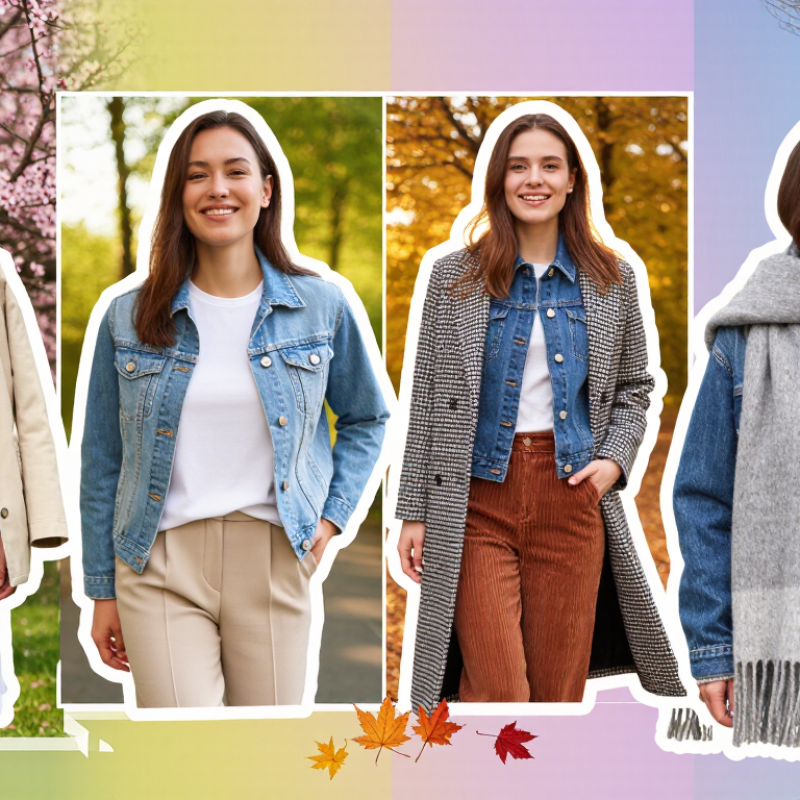
Why Are Denim Jackets Perfect for Every Season?

What Defines a Denim Jacket’s Structure and Fabric

A denim jacket is made from more than thick blue cloth. Traditional denim uses a diagonal twill weave, often with indigo-dyed warp yarns and lighter weft yarns. That contrast creates the blue face and paler underside. Look closely. Fine diagonal lines may be visible, though washing can soften them. Many jackets use cotton, while some add a small amount of stretch fiber for easier movement. The blend affects how the fabric hangs and recovers.

Its shape comes from practical panels: a back yoke across the shoulders, a collar, front plackets, cuffs, and seams that bear stress. Chest pockets add storage and reinforce the front. Metal buttons are common, but secure stitching matters more than shine. Double-needle seams can help high-stress areas withstand regular wear. Not just decoration. Still, heavy fabric alone does not guarantee durability; loose stitching or a poor fit can create problems.

Fabric weight affects comfort. Lighter denim bends readily over a shirt, while denser cloth can block more breeze but feel stiff at first. That stiffness may ease with wear, although it should not pinch at the shoulders. A little room lets the sleeves move freely when you reach forward.

How Denim Provides Comfort Across Changing Temperatures

A denim jacket works across seasons because it adds a useful layer without feeling like a heavy coat. In mild weather, wear it over a cotton shirt; the sturdy fabric can soften the chill of an evening breeze. Indoors, it is easy to take off and carry. A little practical.

As temperatures shift, the layers beneath it make much of the difference. A light tee suits a sunny spring afternoon, while a thin knit or hoodie adds warmth on a cold morning. The jacket’s sleeves and collar help cover exposed skin, but denim is not a substitute for a windproof or insulated outer layer in severe cold. Fit matters, too: tight sleeves can make extra layers uncomfortable, while a relaxed cut leaves room to move.

On warmer days, an unlined, lighter-weight jacket may feel more comfortable than a thick one, especially when worn open. Denim does not regulate temperature by itself, and it can feel hot in direct summer sun. I’ve found that comfort often comes down to small choices, such as rolling the cuffs or removing the jacket during a crowded commute. It is not always the perfect layer, honestly. The same familiar fabric can still adapt well to changing conditions.

Why Are Denim Jackets Perfect for Every Season? – How Denim Provides Comfort Across Changing Temperatures
Season Typical Conditions How a Denim Jacket Helps Comfort Tips
Spring Mild days with cool mornings and evenings A cotton denim layer adds light coverage when temperatures dip, while its open-front design makes it easy to adjust as the day warms up. Wear over a T-shirt or lightweight long-sleeve top; remove it during warmer parts of the day.
Summer Warm weather, especially cooler evenings or air-conditioned spaces A lighter jacket can provide an extra layer without the bulk of a heavy coat. Cotton fabric can absorb moisture, though it may feel less comfortable in hot, humid conditions. Choose a lightweight, relaxed fit and wear it loosely. Take it off in high heat; denim is not a substitute for sun protection.
Autumn Cooler, changeable weather with noticeable temperature shifts Denim works as a midweight outer layer in mild conditions and is easy to combine with other clothing as the weather changes. Layer over a sweater or hoodie when needed. Leave enough room through the shoulders and sleeves for comfortable movement.
Winter Cold weather, particularly on dry, milder days Denim alone provides limited insulation and is not designed to replace a warm winter coat. Its sturdy outer layer can, however, be part of a layered outfit. Wear over warm layers or beneath a larger coat. Choose a lined style for added warmth, and use a weatherproof outer layer in rain or snow.
Temperature note: Comfort depends on the jacket’s fabric weight and fit, what is worn underneath, activity level, wind, humidity, and personal preference. A denim jacket is a versatile layer, not a precise temperature-control garment.

Ways to Style a Denim Jacket in Spring and Summer

A denim jacket earns its place in spring because it handles changing temperatures without demanding a complicated outfit. Wear a light or midweight jacket over a cotton tee with straight-leg trousers, or layer it over a floral dress. When the afternoon warms up, push the sleeves to your forearms. Keep the fit relaxed enough for a thin sweater underneath. A jacket that feels perfect indoors can feel restrictive over extra layers.

For summer, leave the jacket open over a linen shirt, tank top, or simple sundress. Pair it with shorts and sandals for an easy daytime look; roll the cuffs to show a little wrist. Choose an unlined style if you run warm. Denim is not magically breathable, though, and humid evenings can make even a light jacket feel like too much. Air matters. Textile Exchange’s Materials Market Report 2024 estimates global fiber production reached 124 million metric tonnes in 2023, up from 116 million tonnes in its 2023 report for 2022. Those figures do not prove one jacket is sustainable, but they are a useful reminder to wear what you already own often.

Small details can change the feel: a pale shirt softens dark denim, while a darker jacket adds contrast to light summer clothes. Check the shoulder seams and sleeve length before buying; an oversized cut may look effortless but can bunch over a dress. There is no perfect formula. On very hot days, leaving the jacket at home may simply be the better styling choice.

Layering Denim Jackets for Fall and Winter

When autumn mornings turn sharp, a denim jacket works best as a middle layer, not your only defense. I usually leave room beneath it for a thin wool sweater or a long-sleeved thermal shirt. The fit matters. If the shoulders pull when you reach forward, your extra layer is probably too bulky. Try the combination indoors, then raise your arms and sit down. Small checks reveal a lot.

For colder days, wear the denim jacket beneath a roomy wool coat or insulated parka. Let the collar show, but keep the outer layer loose enough to move comfortably. A scarf can fill the gap at the neck, where wind often slips in. Add a warm base layer, dry socks, and shoes suited to wet sidewalks. Denim itself is not especially insulating, and a damp jacket can feel chilly, so check the forecast before relying on it outdoors. That part is easy to overlook.

In fall, a light hoodie can fit underneath, though thick hoods may bunch under a coat. A thinner knit is often more comfortable. I still find some combinations look better standing than walking around all day. Test them on a short outing first. Comfort counts.

How Versatile Cuts and Care Extend Year-Round Wear

A denim jacket works across seasons when its cut fits the layers beneath it. A relaxed shape leaves room for a thin sweater in autumn or a fleece on chilly spring mornings. Cropped cuts sit neatly over dresses and high-waisted trousers, while longer, roomier styles offer more coverage on windy days. In summer, a lightweight, unlined jacket can handle cool evenings without feeling like a heavy coat. Fit matters. A jacket that pulls across the shoulders may be uncomfortable over even a T-shirt.

Fabric weight also changes how often a jacket gets worn. Midweight denim is a practical choice for shifting temperatures, but it can feel too warm in direct summer sun. Look for breathable cotton and simple linings if you plan to wear it indoors. Sleeves that roll easily help, too. Not every cut suits every layer, and that can take some trial and error.

Care keeps the fabric comfortable and presentable over time. Check the care label, since finishes and blends vary. When washing is needed, turn the jacket inside out and use cold water with a mild detergent. Air-dry it on a sturdy hanger; high heat may cause shrinkage or wear. Between washes, spot-clean small marks with a damp cloth. Denim does not need constant washing. Still, waiting too long after a spill can leave a stubborn stain.

FAQS

What gives denim its familiar blue face?

Traditional denim uses a diagonal twill weave. Indigo-dyed warp yarns create the blue surface, while lighter weft yarns show underneath. Look closely.

Which parts give a denim jacket its shape?

A back yoke, collar, front plackets, cuffs, and sturdy seams help form its structure. Chest pockets add storage and reinforce the front.

Does heavier denim always last longer?

Not necessarily. Heavy cloth can still wear poorly if its stitching is loose or the fit creates strain. Shine matters less than secure seams.

How does fabric weight affect comfort?

Lighter denim bends more easily over a shirt. Denser fabric can block more breeze but may feel stiff at first. It can soften with wear.

Can a denim jacket work in changing weather?

Yes, it can add a layer over a cotton shirt on a cool evening. In severe cold, it is not a substitute for insulated outerwear.

What can I wear underneath it on a cold morning?

A thin knit or hoodie adds warmth. A relaxed cut leaves more room for those layers and makes reaching forward easier.

Is a denim jacket comfortable in summer?

A lighter, unlined jacket may feel better worn open. Direct sun can still make denim hot, so taking it off may be the simplest fix.

What should I check when trying one on?

Make sure the shoulders do not pinch and the sleeves move freely. A little room helps. I still find fit harder to judge than fabric.

Conclusion

A denim jacket is defined by its durable woven fabric, distinctive seams, buttons, and practical pockets. Its sturdy yet breathable construction helps it feel comfortable as temperatures change, making it a useful layer throughout the year. The key to how to wear denim jackets in different seasons is adapting the layers and styling around the weather: in spring and summer, pair a lighter jacket with breathable clothing and simple outfits, while in fall and winter, wear it over warmer layers such as sweaters or under a heavier coat.

Different cuts, from relaxed to fitted, offer options for varied outfits and layering needs. With thoughtful care, denim can retain its shape and remain a dependable part of a wardrobe across seasons. By choosing suitable layers, pairing the jacket with season-appropriate pieces, and caring for the fabric, you can enjoy its versatility in changing weather.

Liam

Liam

Liam is a dedicated marketing professional with a profound expertise in the industry, where he excels at highlighting the unique advantages of our core products. With a keen understanding of market trends and consumer needs, Liam frequently updates our company’s professional blog, providing......